Table procedure
Do you show sequences during play or only at declaration?
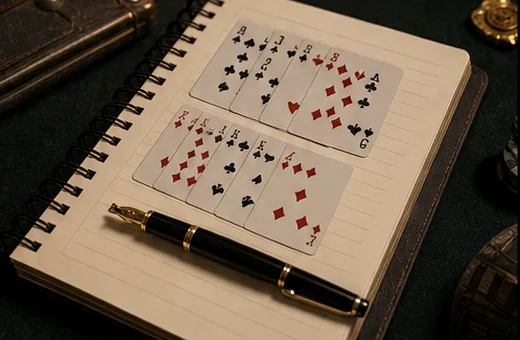
Players normally organize their own cards privately and expose the final grouping when a declaration must be checked.
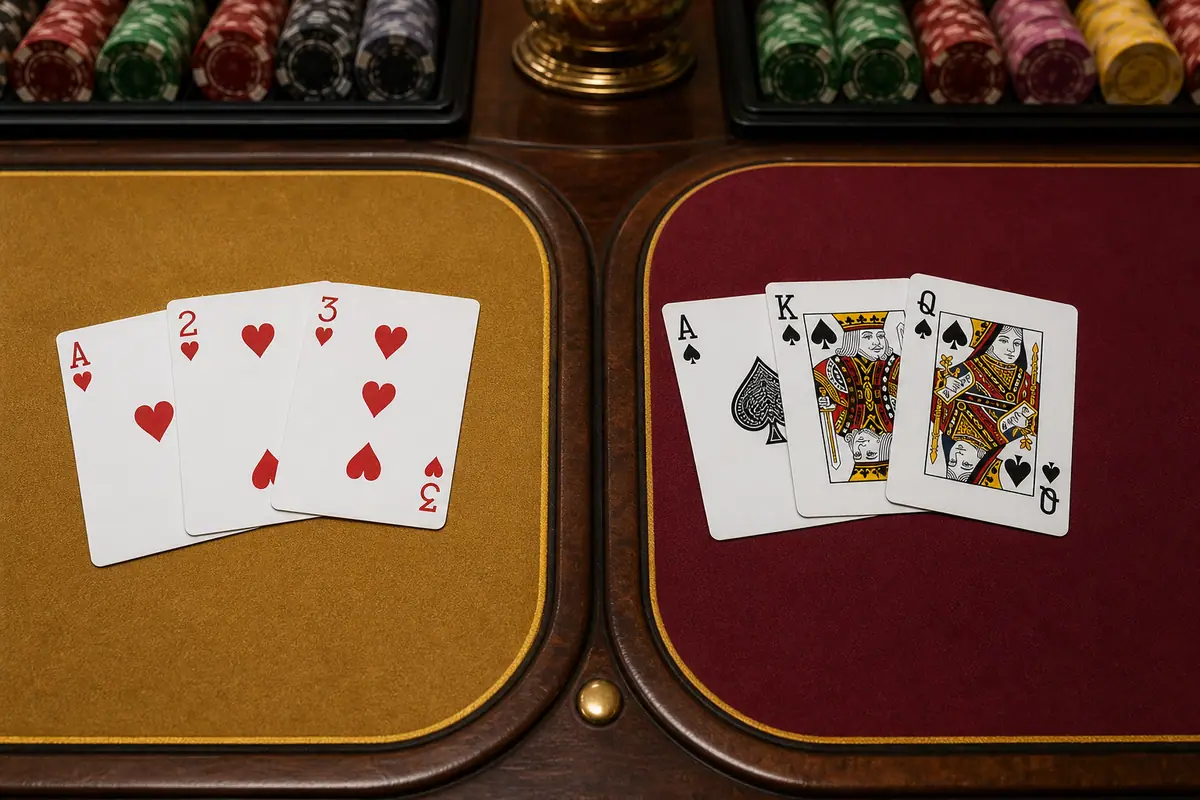
Direct answer: In the commonly documented Indian Rummy procedure, your cards and planned sequences stay concealed during play. You reveal and arrange them when declaring so the hand can be validated. An app may let you drag cards into visible-on-your-screen groups, but that private interface does not mean opponents can see the sequence.
Private grouping versus public reveal
| Stage | What you do | Who sees it? |
|---|---|---|
| Normal turns | Sort cards into possible groups | Usually only you |
| After a draw | Recheck and discard | Discard is visible |
| Declaration | Submit final sequences and sets | Validator/table checks them |
Why concealment matters
Revealing a run early changes the information available to other players and is not part of the standard closed-hand procedure. In an app, sorting buttons are organizational tools; they are not declarations unless you use the specific declare action.
Before you reveal
- Confirm at least one pure sequence.
- Confirm a second legal sequence.
- Place every remaining card in a valid group.
- Use the table’s declaration flow, not a chat message or screenshot.
What each interface action usually means
| Action | Typical effect | Is it a declaration? |
|---|---|---|
| Sort | Orders cards by suit or rank | No |
| Group | Creates private visual clusters | No |
| Discard | Places one card on the open pile | Usually no |
| Declare/Show | Submits the complete hand | Yes, when the room says so |
Worked privacy example
You drag 4♥-5♥-6♥ together and 9♣-10♣-J♣ together on your screen. That helps you think, but the opponents ordinarily see only your face-down hand and the public discard activity. The groups become evidence when you use the formal declaration control and the room exposes them for validation.
What not to reveal in chat
Do not send screenshots of your live hand, OTPs, account identifiers, or recovery details to someone offering to “check” a sequence. A rules question can be asked with a fictional card example after the hand. The validator or an agreed table procedure, not an unknown contact, decides a live declaration.
If the room auto-groups cards
Automatic sorting can be helpful, but it may place a joker beside nearby ranks without proving the group is legal. Review suit, order, joker role, and total card count yourself. If the app shows a preview warning, correct the named group before declaring rather than relying on the visual spacing.
A home practice table should also set a clear reveal signal. One player saying “declare” and laying all groups down is easier to verify than exposing one sequence at a time while continuing to draw.
Source and rule boundary
Pagat’s Indian Rummy overview says players keep cards concealed until a player declares and exposes the combinations. A social house variant may ask for a different reveal procedure.