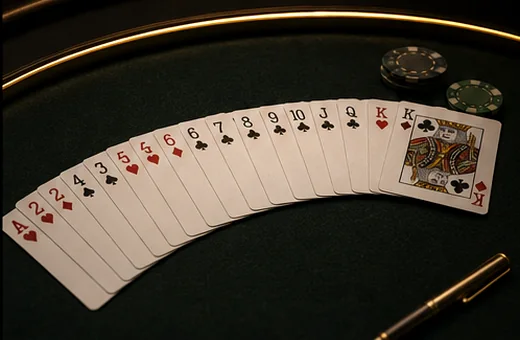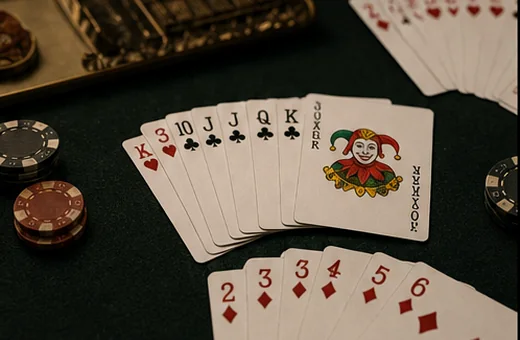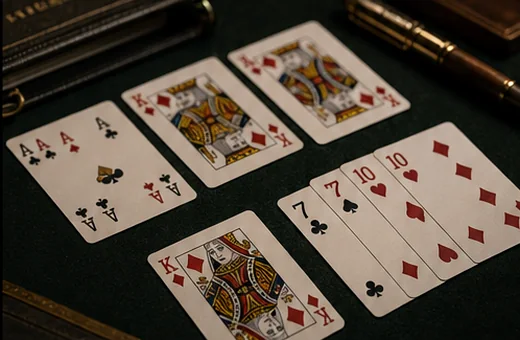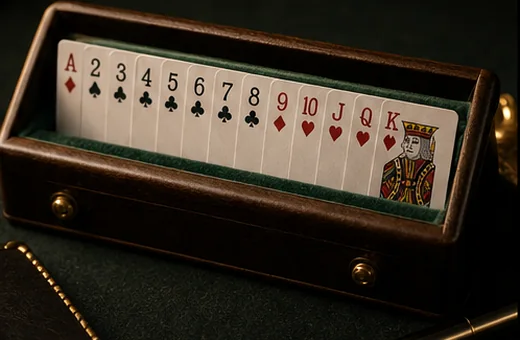
Hand structure
Can you make more than two sequences in Indian Rummy?
Two sequences is commonly the minimum for declaration, not the maximum number allowed in a hand.
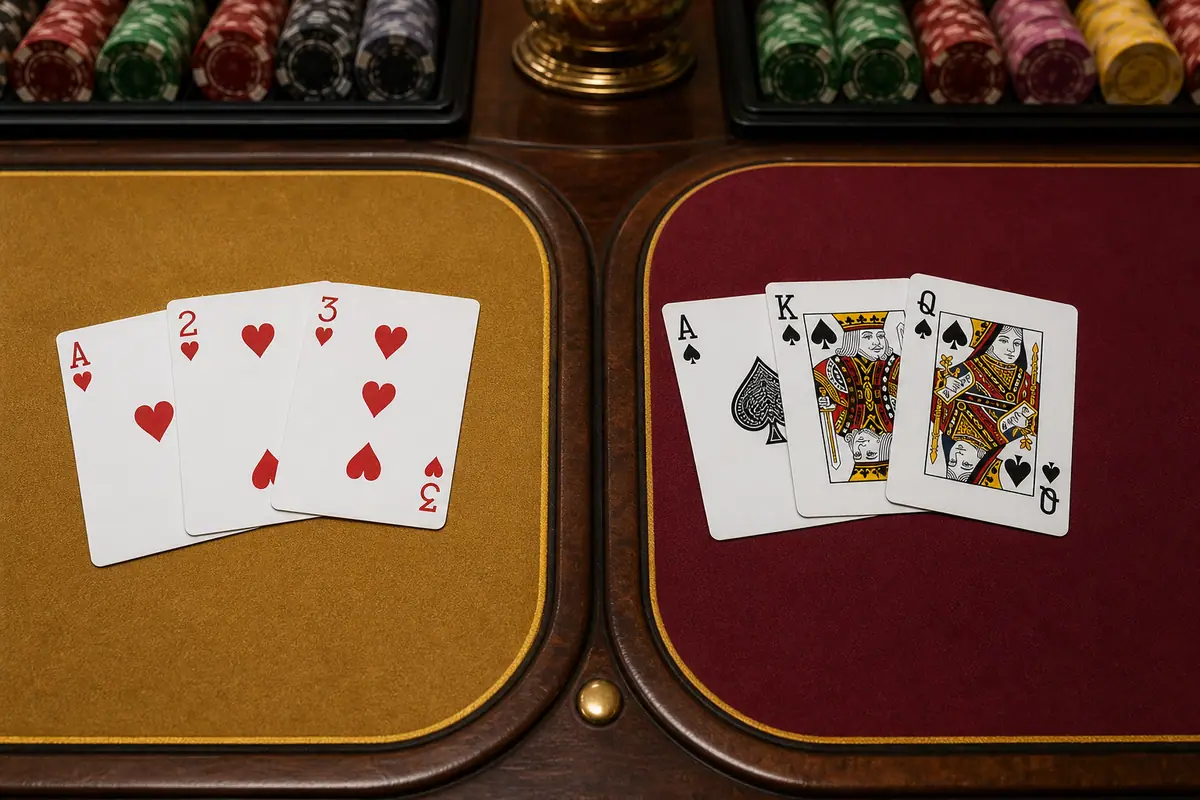
Direct answer: Yes. A 13-card Indian Rummy hand may contain three or four sequences, provided each run is legal and at least one is pure. You do not have to create a set if all cards fit valid runs. Count all thirteen cards once and apply the current room’s joker, ace, and declaration rules.
Example with four sequences
| Cards | Group |
|---|---|
| 2♥ 3♥ 4♥ | Pure sequence |
| 6♠ 7♠ 8♠ | Pure sequence |
| 9♦ 10♦ J♦ | Pure sequence |
| 3♣ 4♣ 5♣ 6♣ | Pure sequence |
Minimum versus maximum
The familiar rule says a declaration needs at least two runs, including at least one without a joker substitute. “At least” means more are permitted. A player may choose the grouping that makes the thirteen-card hand easiest to verify.
Final validation steps
- Check that every run uses one suit.
- Confirm ranks are consecutive and each group has at least three cards.
- Mark which run is pure.
- Make sure the total is thirteen and no physical card appears twice.
Three-sequence example with a set
Use 2♥-3♥-4♥, 7♣-8♣-9♣, J♦-Q♦-K♦-A♦ and 5♠-5♥-5♣. The group lengths are 3 + 3 + 4 + 3 = 13. The first three groups are natural same-suit runs and the last is a same-rank set, so the hand demonstrates that three sequences can coexist with a set.
Patterns that still fail
| Pattern | Why it fails |
|---|---|
| Three impure runs, no pure run | The compulsory pure sequence is missing |
| Two legal runs + six loose cards | The full hand is not grouped |
| Four groups totaling fourteen cards | A physical card was counted twice |
| Three-card group with mixed suits | It is not a sequence |
Regroup without losing the pure run
When a fourth run is nearly complete, first lock the natural sequence that already meets the pure requirement. Then move only genuinely loose cards. A joker can bridge one missing rank in an impure run, but it cannot repair mixed suits or allow one card to belong to two groups.
More sequences are not automatically a strategic advantage. They are simply another legal way to partition thirteen cards. The safest declaration is the one whose group boundaries and joker roles are obvious on the validation screen.
If an app’s automatic sort merges two neighboring runs, separate them only when both resulting groups contain at least three cards. Visual spacing never overrides the rank-and-suit rules.
Source and rule boundary
PlayRummy’s published rules set a minimum sequence requirement, while Pagat describes the remaining combinations as additional runs or sets. Use the table’s displayed validator when house rules differ.